Oct 22, 2026Door Hardware
How to Read Door Hardware Specifications: Backset, Door Thickness and Handing
Learn how to measure backset, door thickness, and handing before ordering door hardware, with exact dimension ranges for plates, levers, and latches.
Selecting new door hardware begins with measuring the physical opening rather than browsing decorative finishes. While lever profiles and metallic finishes define the visual character of a room, precise dimensions dictate whether a latch operates smoothly, whether mounting screws anchor firmly, and whether a rose plate covers previous marks on the door stile. Installing hardware that fails to match an existing preparation leads to unnecessary carpentry work and delays.
Interior doors across residential homes and commercial suites follow standard preparation formats, yet slight variations in bore offset or leaf thickness can prevent proper fitting. An incorrect backset binds against the jamb, an undersized rose leaves unfinished wood exposed, and a leaf thickness outside the specified range prevents mounting fasteners from cinching tight.
Standing before an open door edge with a tape measure, it is easy to wonder which dimensions on a hardware specification sheet truly dictate whether a new handle set will fit an existing opening.
This guide breaks down every core measurement found across the 17 door hardware designs in the catalog. You will learn how to measure backset, check door thickness, confirm handing, and evaluate plate, lever, latch, and strike dimensions. If you are selecting hardware for cabinets or drawers rather than room doors, center-to-center hole spacing is an entirely different measurement detailed in our cabinet pull guide.
Backset and the Two-Position Adjustable Latch
Backset is the distance from the edge of the door leaf to the center of the bore hole housing the handle spindle. On an installed door, measure from the door edge directly to the center of the handle turn piece or cylinder. North American door preparations use one of two standard backsets: 60 mm, which is 2-3/8 inches, or 70 mm, which is 2-3/4 inches.
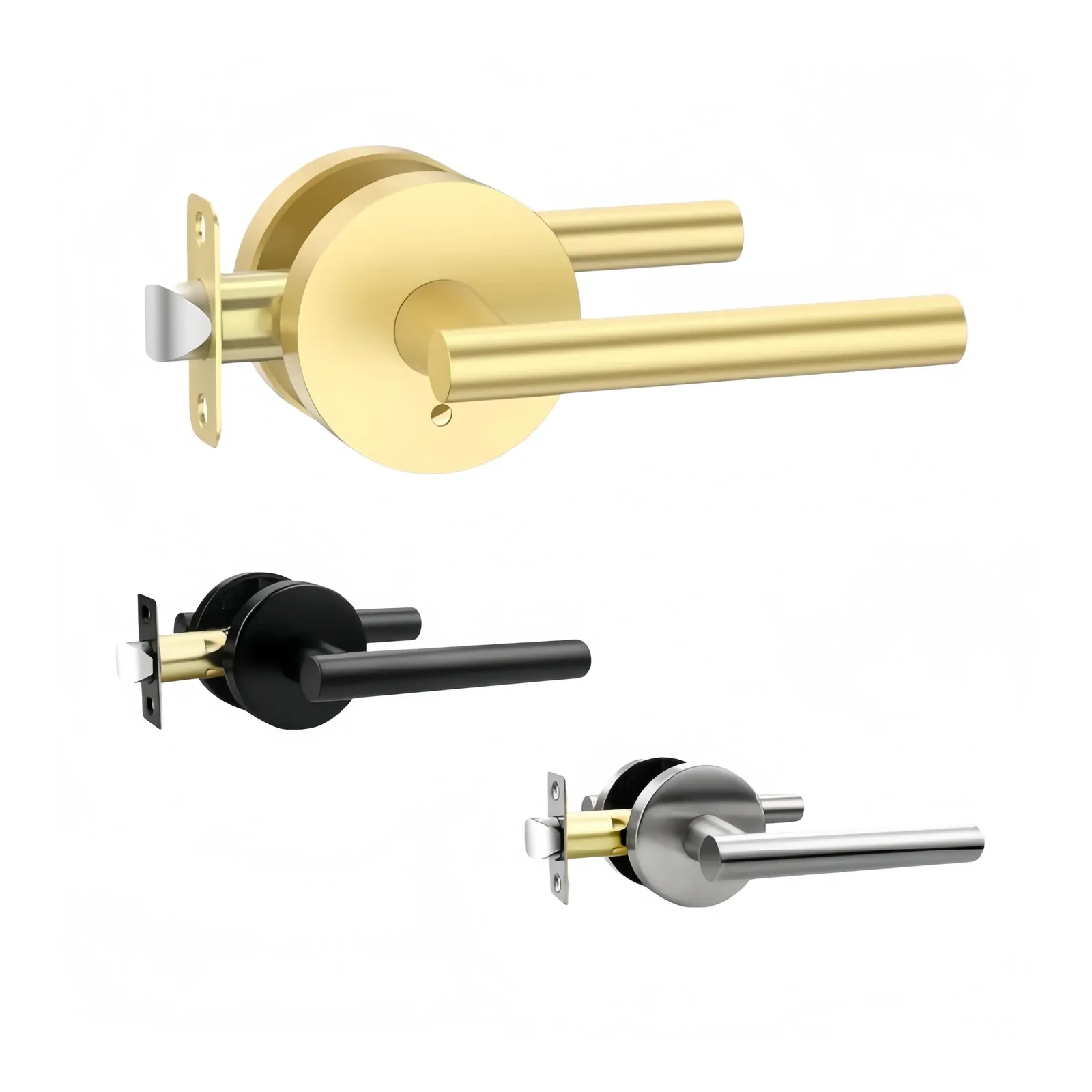
Sets in the collection feature an adjustable tubular latch that switches between 60 mm and 70 mm positions. You set the latch to match the bore already cut in the opening before fitting. This single latch part serves a mixed corridor without requiring extra carpentry or a second latch part.
Door Leaf Thickness Across Standard and Extended Ranges
Door thickness is measured straight across the door edge, from interior to exterior face. Most lever sets and knob designs accommodate the standard interior thickness class spanning 35 to 45 mm, or 1-3/8 to 1-3/4 inches. This class includes cylindrical levers, keyless square-rose privacy locks, knurled matt black levers, square-rose crystal knobs, and square-rose keyed locks. Keyed spherical knob sets list a matching span of 34.9 to 44.5 mm.
For non-standard leaves, the occupancy-indicator lock spans an extended range from 33.0 to 50.8 mm, or 1-3/10 to 2 inches. This wider span accommodates thinner custom panels as well as heavy 2-inch commercial leaves, ensuring proper fastener engagement across diverse doors.
Handing, Swing Direction, and Reversible Latches
Handing refers to which side of the door holds the hinges and which way the leaf swings open. Hardware in this collection incorporates reversible handing for left-hand and right-hand doors across cylindrical, flat, knurled, and occupancy-indicator sets. One box serves either swing direction, avoiding the need to manage separate left and right inventories.
Selecting between passage, privacy, keyed entry, or dummy operation depends on room use, a topic explored in our door hardware functions guide. When organizing your project schedule, note that dummy sets serve non-latching inactive leaves on double doors. Because a dummy set acts as a fixed trim, it requires neither an internal latch bore nor an adjustable backset.
Rose and Plate Dimensions for Stile Coverage
The rose or backplate secures the handle chassis to the door face, and its outer dimensions determine stile coverage. Choosing a rose with adequate diameter conceals marks and previous bore holes cleanly. Round roses include compact 40 mm (flat lever) and 46.7 mm (occupancy-indicator lock) plates, mid-sized 52 mm (traditional and fluted brass levers), 63 mm (knurled matt black lever), 64 mm (cylindrical lever), and 65 mm (crystal knob set) options, up to 70 mm, or 2.76 in, round rose discs on the round double-sided lock.
Square and rectangular escutcheons offer tailored architectural lines. Keyless square-rose privacy plates measure 2.17 by 2.4 in. Square-rose crystal knob sets feature a 64 mm, or 2.52 in, square plate, while the square-rose knurled lock uses a 64.5 mm plate. The square-rose keyed lock carries a plate 65 mm, or 2.56 in, high, and keyed spherical knob sets feature a rose plate height of 65.1 mm, or 2-9/16 inches. The zinc alloy knob set provides a rectangular plate measuring 63 by 120 mm at 12.5 mm thickness.
Lever Reach, Projection, and Hand Clearance
Lever length sets hand leverage and clearance beside the door frame, while projection determines knuckle room from the door face. Levers span from 119 mm on the flat lever, 125 mm, or 4.92 in, on the square-rose keyed lock, 130 mm on the occupancy-indicator lock, and 136 mm on the cylindrical lever, up to 140 mm on traditional brass, fluted brass, and knurled matt black models. Keyless square-rose privacy levers measure 4.84 in from rose face to tip at 1 in height.
Grip projections ensure comfortable clearance. The cylindrical lever projects 65.5 mm from the mounting face to lever top with a 19 mm diameter and 45 degrees of downward travel. Knurled matt black levers project 68 mm with a 24 mm grip diameter, fluted and traditional brass levers measure 22 mm in diameter, and square-rose knurled privacy levers project 75.4 mm. Knob heads measure 57 mm across, offering an 18 mm depth on crystal knobs with 13 mm rose thickness, or a 21.5 mm neck on zinc alloy sets.
Latch Mortises, Bore Depths, and Strike Plates
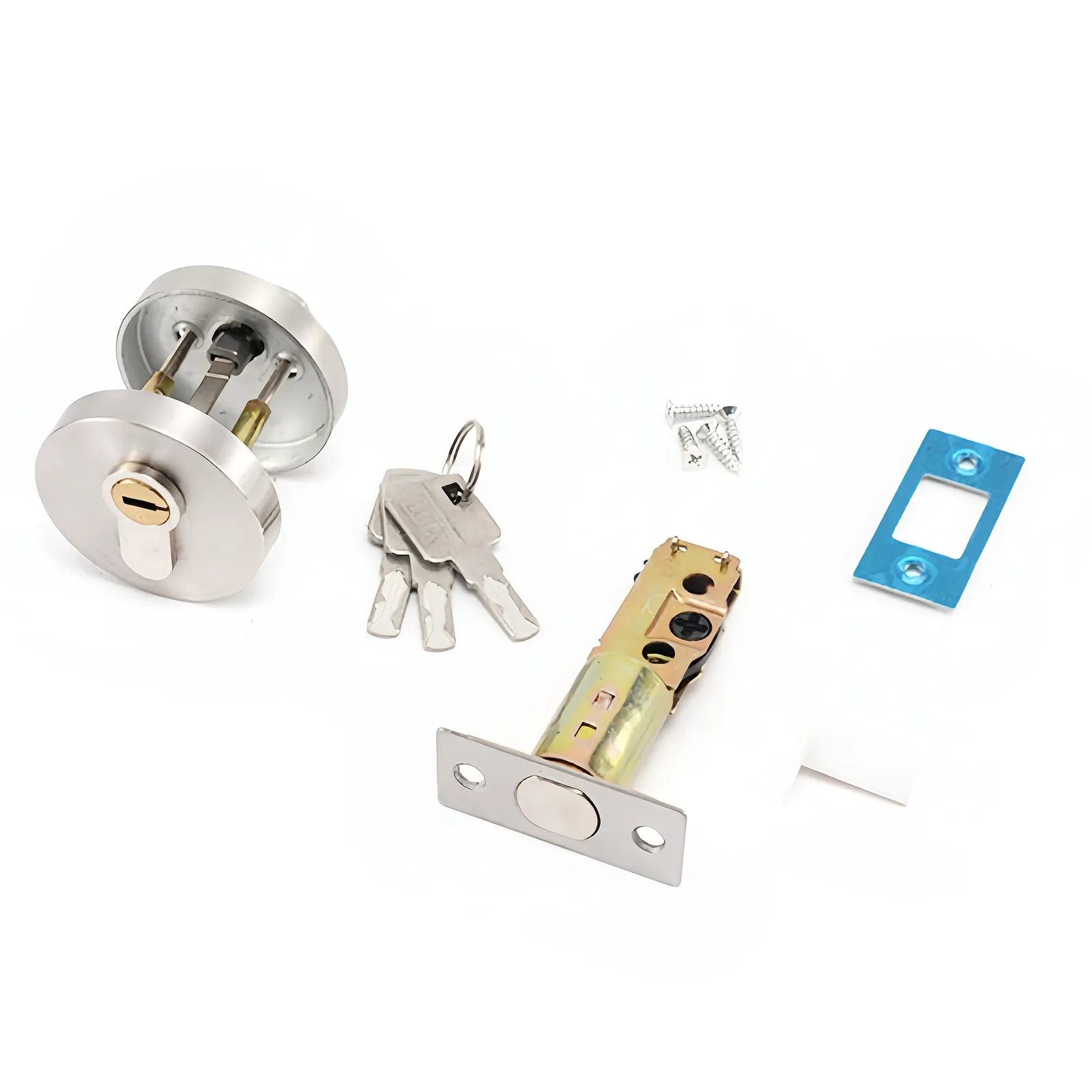
Internal latch and strike dimensions govern door edge and jamb routing. Latch face plates set the edge mortise cut, measuring 55 mm high on the keyless square-rose lock, 57 mm high by 26 mm wide on flat lever and square-rose keyed models, and 57 by 41.5 mm at 25 mm thickness on the square-rose knurled lock. The flat lever latch body is 57 mm high by 40 mm deep within an 83 mm unit, while the square-rose keyed lock has a latch body depth of 43 mm, or 1.69 in.
Strike plates receive the latch bolt inside the frame cutout. The cylindrical lever includes a 25.4 by 57 mm strike plate, the square-rose crystal knob includes a 55 by 25 mm strike plate, and the keyless square-rose privacy lock provides a 43 by 55 mm strike plate with a 25 mm opening. Verifying strike dimensions against your frame prevents recutting mortises.
Kit Contents and Fitting Pre-Bored Doors
Checking kit contents confirms that all mounting hardware is on hand before installation begins. Each kit contains a door lever set, an adjustable latch, a strike plate, a strike box, long screws, short screws, and an instruction sheet. Crystal knob packages supply screws in two lengths, providing 35 mm, or 1.38 in, and 20 mm, or 0.79 in, fasteners. Knurled stainless lever sets supply two levers with rose trim, a rose mounting screw, and a through-door cassette with a square spindle.
These sets fit pre-bored door leaf preparations without structural timber modification. Because standard preparation needs no extra carpentry and no second latch part, installing new handles remains fast and clean across both single doors and multi-room projects.
A Pre-Ordering Measurement Checklist
Before finalizing hardware for your project, record five essential details for every opening on your schedule sheet:
First, record the required function, noting whether an opening takes passage, privacy, or keyed operation, or if an inactive leaf requires a dummy trim. Second, verify that the 60 mm or 70 mm backset matches your pre-drilled bore. Third, measure leaf thickness across the door edge, confirming that it falls within the 35 to 45 mm class or requires the wider 33.0 to 50.8 mm range. Fourth, check swing direction, noting that reversible handing accommodates either left or right swing. Finally, verify that rose plate dimensions cover existing marks on your stile, and note your chosen finish.
Once those four numbers are written down, every lever, knob or lock set on the door hardware range can be checked against them before anything is ordered.