Oct 9, 2026Door Hardware
Door Hardware Functions Explained: Passage, Privacy, Keyed and Dummy
Learn the differences between passage, privacy, keyed, and dummy door hardware. Find the right function for every room while keeping a consistent finish and profile across your home.
Walking down a central hallway during a remodel, every interior door panel can appear identical from the outside. Behind each door, however, daily routines differ. A walk-in wardrobe requires immediate, unhindered movement. A family bathroom demands reliable privacy that prevents accidental intrusion. A dedicated home office or guest room may call for restricted entry to protect quiet work and personal belongings.
Because spaces serve distinct purposes, interior door hardware is divided into four primary functions: passage, privacy, keyed entry, and dummy trim. While the exterior rose profile, finish, and handle shape remain uniform along a corridor, the latch and locking components inside the door leaf vary depending on where the door leads. Selecting the wrong mechanism can create daily frustration, such as an accidental lockout from a storage closet or an unnecessary keyhole on a linen door.
Understanding how each hardware function operates allows you to allocate the correct build to every opening on your floor plan before ordering. This guide examines the differences between all four core configurations, explains where each belongs across a residential layout, outlines specialty options like occupancy indicators and add-on deadbolts, and demonstrates how to maintain visual continuity along your hallways.
Passage Sets: Non-Locking Hardware for Corridors and Shared Spaces
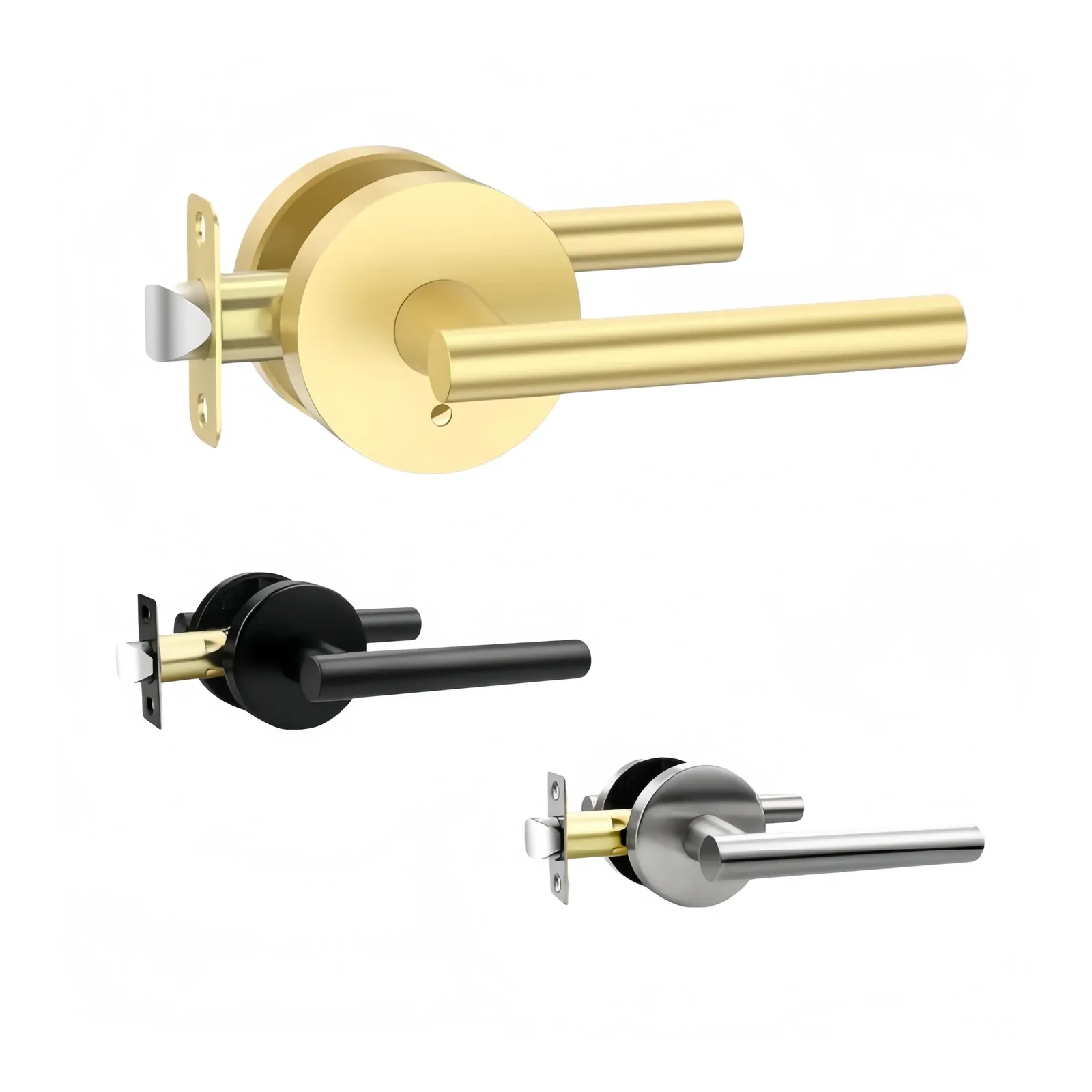
Passage sets are keyless, non-locking handle assemblies engineered for doors where latching is required but locking is not needed. The internal tubular latch holds the door leaf closed within the frame to control airflow and maintain room division, but turning the lever or knob from either side retracts the latch bolt immediately. Because passage sets ship with no internal locking buttons or key cylinders, the door opens freely from either side with a plain turn.
This unrestricted operation makes passage hardware the natural choice for high-traffic circulation routes and utility storage throughout the home. Interior hallway corridors, connecting doors between living spaces, walk-in closets, kitchen entrances, living rooms, and dining areas rely on passage sets for smooth travel. Because the mechanism operates identically from both directions, passage trim also suits pantry cupboards and laundry doors where an accidental lockout would cause unnecessary disruption.
Privacy Locks: Keyless Locking with an Outside Release
Privacy locksets deliver personal seclusion for bedrooms and bathrooms without requiring occupants to carry keys. From inside the room, an occupant engages the lock using an integrated interior control. On door knob sets, this control is typically a push button on the inside knob. On lever sets, such as keyless square-rose privacy locks, locking relies on a turn button recessed into the lever side face near the pivot root or positioned on the inner rose plate. Rotating the dial or depressing the button locks the door from inside, preventing the exterior handle from retracting the latch.
Because the assembly is designed for interior privacy rather than main-entrance access, no key cylinder appears on the exterior rose face. Instead, the outer trim carries a release that opens the door from outside when a room must be entered, as the catalog describes for its privacy builds. The latch carries a plain curved bolt, so the closed door reads as a simple interior lock rather than an entry set.
Keyed Entry Locks: Controlled Cylinder Access for Private Rooms
Keyed entry locks introduce a dedicated key cylinder to manage access from the outside corridor. The exterior rose plate or knob face carries an integrated cylinder, allowing an authorized keyholder to retract the latch bolt and enter the room. On the interior room side, the assembly incorporates a turn piece or thumb turn button, enabling occupants to lock or unlock the door from inside without needing a physical key.
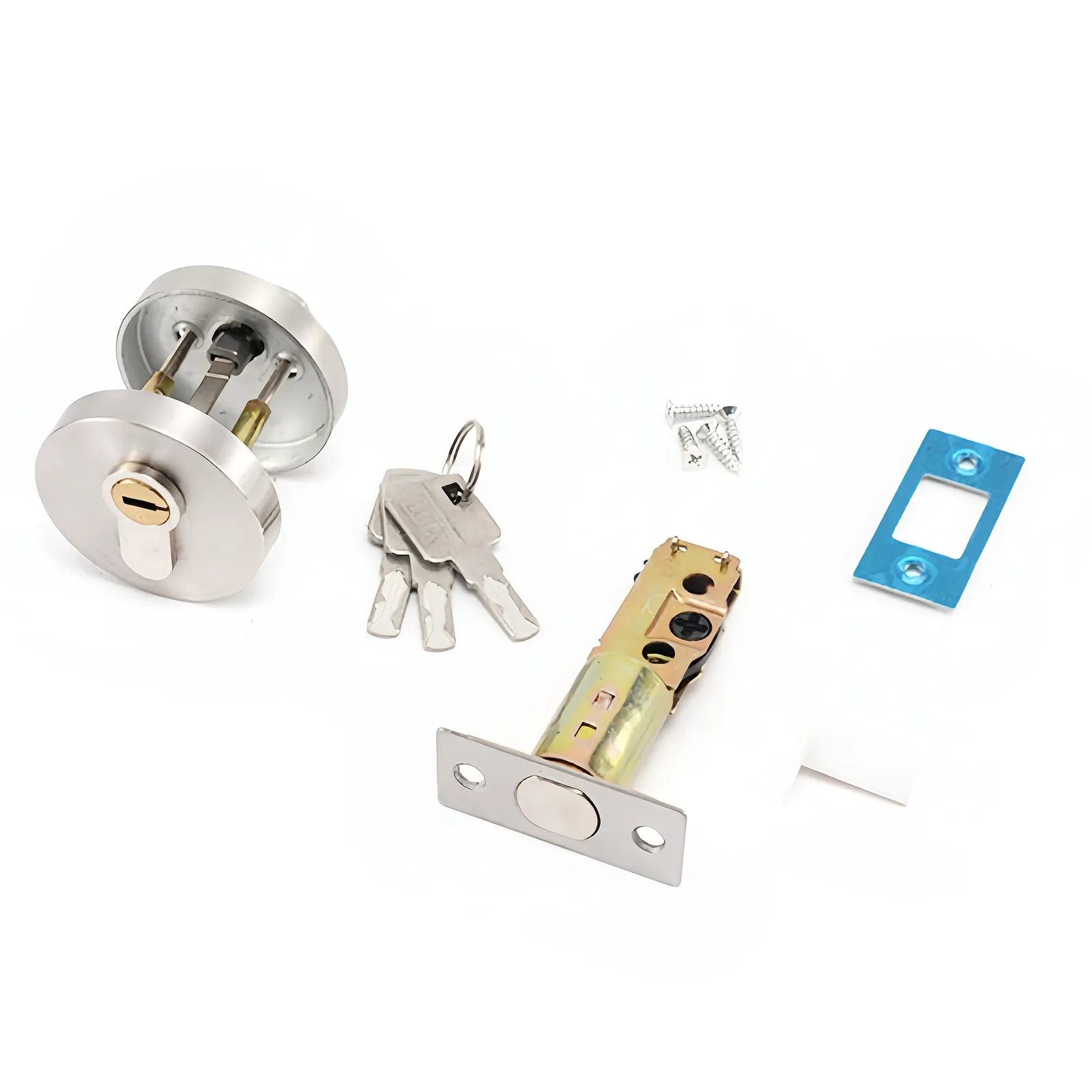
Inside residential floor plans, keyed entry hardware suits interior doors requiring selective access. Master bedroom retreats, home studies, private office suites, and dedicated guest rooms benefit from keyed entry when personal belongings or confidential files need protection while the room is unattended. For doorways calling for secondary closure, keyed spherical knob sets can take an optional deadbolt add-on for the same door.
Dummy Trim: Stationary Pulls for Inactive Leaves and Double Doors
Dummy hardware differs fundamentally from passage, privacy, and keyed sets because it contains no latching mechanism. A dummy set includes no tubular latch body, no internal spindle, and no strike plate mounted on the door frame. Instead, the lever handle or knob functions as a stationary trim piece that mounts directly to the door panel, serving solely as a fixed grip to pull or push the leaf open and closed.
This stationary configuration completes the inactive leaf in a double-door opening, such as paired French doors opening into a study. In double installations, one active leaf carries an operable passage or privacy latch, while the inactive leaf receives dummy trim to mirror the handle placement and keep the pair balanced. Dummy knobs and levers also give a pull point on shallow linen cupboards, wardrobe leaves, and pantry storage panels.
Occupancy Indicator Locks: Clear Visual Status for Shared Spaces
In busy households and multi-use environments, standard privacy locks can leave visitors unsure whether a room is in use without rattling the handle or knocking. Occupancy indicator locks eliminate this uncertainty by incorporating an occupancy window directly on the rose plate. When an occupant engages the interior turn mechanism, the exterior indicator window visibly switches between Vacant and In-Use markings, displaying room status clearly down the hallway.
This immediate visual confirmation makes occupancy indicator hardware well suited for shared guestrooms, clinic consultation areas, and hospitality suites. The hardware pairs a compact rose plate measuring 46.7 mm across with a 130 mm lever handle, fitting door leaf thicknesses from 33.0 to 50.8 mm. By showing clear status on the rose face, the unit prevents awkward interruptions while preserving the keyless emergency outside release characteristic of residential privacy hardware.
Corridor Harmony: Specifying One Design Family Across Multiple Functions
A frequent challenge when outfitting a home is maintaining visual continuity across a hallway where adjacent doors require different locking capabilities. Placing mismatched handle styles along the same corridor creates a disjointed appearance. Unified hardware collections solve this by allowing specifiers to maintain one rose profile and one grip style across an entire project while assigning distinct functions room by room.
Comprehensive collections, including cylindrical levers, flat levers, square-rose keyed locks, and round double-sided locksets, offer passage, privacy, keyed entry, and dummy configurations within identical exterior contours. Reversible handing, listed across several of these sets, means one part fits both left-hand and right-hand door swings. An adjustable latch covering standard 60 mm and 70 mm backset positions and 35 to 45 mm door leaves supports coordinated hardware across mixed interior openings.
Room-by-Room Door Schedule: Planning Your Hardware List
Creating a door schedule before ordering ensures every opening receives its intended function while avoiding missing trim. Walk through your floor plan methodically, identifying the privacy demands of each space. Hallway passages, closets, and connecting doors receive passage hardware. Family bathrooms, powder rooms, and bedrooms take privacy locks. Private office suites and master bedrooms receive keyed entry locks, while paired double doors receive one operating latch set alongside one dummy trim.
Standing in a central hallway with your floor plan in hand, assigning the correct lock function to each doorway turns a complex hardware schedule into an organized, room-by-room checklist.
Matching function to daily habit keeps high-traffic doorways easy to use and quiet rooms lockable, while a doorway-by-doorway review of your floor plan gives you full confidence when finalizing a hardware order. When you are ready to coordinate finishes, lever silhouettes, and latch mechanisms across your home, explore the door hardware collection to find matching suites for every interior space.